Talk of a “2026 Social Security rewrite: new rules that could influence your monthly income” has raised understandable concern among retirees and workers. In reality, there is no single sweeping overhaul set to take effect in 2026.

Instead, Americans will see a mix of automatic rule changes, targeted benefit adjustments, and intensifying debates in Washington about how to fix Social Security’s long-term funding gap.
2026 Social Security Rewrite
| Key Point | 2026 Detail |
|---|---|
| COLA for 2026 | 2.8% increase in Social Security and SSI benefits |
| Taxable maximum | Payroll tax cap rises to $184,500 |
| Earnings test limits | Under-FRA limit: $24,480; FRA-year limit: $65,160 |
| SSDI thresholds | Substantial gainful activity rises to $1,690 (non-blind) and $2,830 (blind) per month |
| Trust fund outlook | Combined funds projected depleted in 2034; OASI in 2033 |
| Major reform bills | Social Security 2100 Act; new ideas like COLA caps for high earners |
What the “2026 Social Security Rewrite” Really Refers To
The phrase “2026 Social Security rewrite” has appeared in headlines and commentary, but it can be misleading. As of now, there is no enacted law that fundamentally rewrites the Social Security system starting in 2026.
Instead, three things are happening at once:
- Automatic annual adjustments set by existing law are kicking in for 2026, including a 2.8% cost-of-living adjustment and higher earnings and tax thresholds.
- A recently passed law, the Social Security Fairness Act, is still being implemented and is changing benefits for millions of public-sector retirees affected by the Windfall Elimination Provision (WEP) and Government Pension Offset (GPO).
- Congress and outside policy groups are debating larger reforms to close the funding shortfall projected for the 2030s, but those proposals are not yet law.
Confirmed Social Security Rule Changes Taking Effect in 2026
1. A 2.8% COLA Will Raise Monthly Benefits
The Social Security Administration (SSA) has confirmed a 2.8% cost-of-living adjustment (COLA) for 2026, based on inflation data from the Consumer Price Index for Urban Wage Earners and Clerical Workers (CPI-W).
- The average retired worker benefit is projected to rise from about $2,015 to $2,071, an increase of roughly $56 per month.
- SSI recipients will see the higher amount beginning with payments dated December 31, 2025, while other beneficiaries will see the increase in checks for January 2026.
Advocacy groups such as the Senior Citizens League and AARP note that while the COLA offers some relief, many older Americans still say the increase does not fully keep up with rising costs for housing, food, and healthcare.
2. Payroll Tax Cap and Earnings Test Limits Will Rise
The maximum amount of earnings subject to the Social Security payroll tax will increase to $184,500 in 2026, up from $176,100 in 2025.
- Workers earning above that level will pay Social Security tax on a larger share of their income.
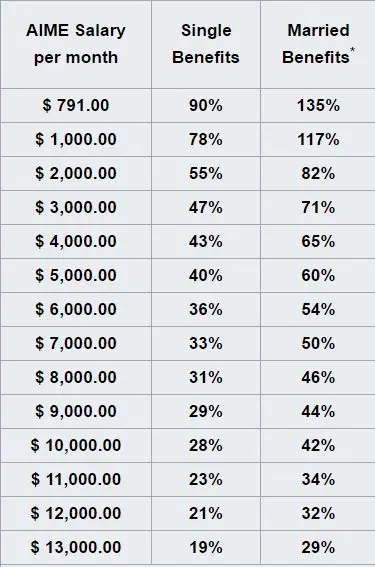
- Over a career, those higher taxed earnings can also increase future benefits, because Social Security calculations are based on your highest 35 years of indexed earnings.
At the same time, the earnings test limits — which determine how much you can earn while receiving benefits before some are temporarily withheld — are also increasing:
- Under full retirement age: $24,480 per year; $1 in benefits withheld for every $2 earned above the limit.
- Year you reach full retirement age: $65,160; $1 withheld for every $3 earned above that amount, but only for months before reaching full retirement age.
3. Disability and SSI Thresholds Will Move Up
For people with disabilities, 2026 brings higher thresholds tied to Substantial Gainful Activity (SGA) and the trial work period:
- SGA for non-blind workers rises to $1,690 per month.
- SGA for blind workers rises to $2,830 per month.
- The trial work period threshold increases to $1,210 per month.
These figures influence whether someone qualifies as disabled under Social Security rules and how much work they can attempt without immediately losing benefits. The SSI federal benefit rate also rises slightly — to $994 per month for individuals and $1,491 for eligible couples — reflecting the 2.8% COLA.
4. Fairness Act Implementation Continues for Certain Public Pensioners
A separate but important change for many retirees stems from the Social Security Fairness Act, signed into law in early 2025. The law eliminates the Windfall Elimination Provision (WEP) and Government Pension Offset (GPO), which historically reduced Social Security benefits for people who also received certain public pensions that did not pay Social Security taxes.
According to the Social Security Administration, about three million people are expected to receive higher monthly benefits and, in many cases, retroactive payments as their records are updated. By mid-2025, SSA reported processing about 91% of these adjustments.
The Funding Squeeze: Why Bigger Reforms Are Back on the Agenda
The most serious pressure on Social Security is financial, not administrative.
According to the 2025 Trustees Report, the combined Old-Age and Survivors Insurance (OASI) and Disability Insurance (DI) trust funds are projected to be depleted by 2034, one year sooner than previously forecast.
- At that point, incoming payroll taxes would still cover about 81% of scheduled benefits.
- The main retirement trust fund (OASI) alone is projected to run short in 2033, covering roughly 77% of promised benefits if Congress does nothing.
Under current law, Social Security cannot borrow to make up the gap. Benefits would have to be cut across the board if the trust funds run dry. That risk is why think tanks and lawmakers on both sides are talking about what many call a future “rewrite” of Social Security rules — even if they strongly disagree about what that rewrite should look like.
Major Reform Ideas That Could Shape Future Rules (But Are Not Law Yet)
1. The Social Security 2100 Act: Expand Benefits, Raise Taxes on High Earners
One of the most prominent proposals in Congress is the Social Security 2100 Act, introduced in the House as H.R. 4583.
Among other changes, the bill would:
- Increase the primary insurance amount used in benefit calculations, temporarily boosting benefits for all retirees.
- Enhance benefits for widows and widowers in two-earner households.
- Extend benefits for students with deceased, disabled, or retired parents up to age 25.
- Eliminate WEP and GPO (now largely accomplished through the separate Fairness Act).
- Subject earnings above $400,000 to Social Security payroll taxes, effectively lifting the cap on very high incomes.
The bill would also merge the retirement and disability trust funds into a single account. While it has strong support among many Democrats and advocacy groups, it has not yet passed both chambers and does not have a clear path in the current Congress.
2. Targeted COLA Caps for High-Earning Beneficiaries
Outside Congress, budget watchdogs such as the Committee for a Responsible Federal Budget (CRFB) have suggested trimming future COLAs for higher-income beneficiaries as a way to extend Social Security’s solvency.
One floated idea would cap the annual dollar amount of COLA increases for those already receiving large checks. Estimates from CRFB put potential savings from a carefully designed COLA cap at about $115 billion over a decade.
3. Raising the Payroll Tax Cap or Rate
Several bipartisan commissions and think tanks have recommended raising or eliminating the taxable maximum — the cap on wages subject to Social Security tax — as a way to close the funding gap.
Common variants include:
- Taxing all earnings, but crediting only part of those additional contributions toward higher benefits.
- Adding a new surtax on very high earners.
4. Retirement Age, Privatization and “Baby Accounts”
Some Republican lawmakers and conservative economists have argued for gradually raising the full retirement age again or introducing more private saving mechanisms tied to Social Security.
A recent example is the debate around new “baby accounts” — federal child savings accounts backed by government contributions and private investment. The U.S. Treasury Secretary himself described them at one point as a potential “backdoor for privatizing Social Security,” before the White House clarified they are intended to supplement, not replace, traditional benefits.

Related Links
$2,000 Stimulus Proposal Reviewed: Check Expected Payment Dates and Eligibility Criteria
New 2026 Tax Plan Could Lead to Larger Refunds — What the Proposed Bill Aims to Change
5. Political Red Lines: “No Cuts” vs “No New Taxes”
President Joe Biden has repeatedly pledged not to cut Social Security benefits or raise the retirement age, instead calling for higher taxes on wealthy Americans to shore up the system.
FAQs About 2026 Social Security
Is there really a “2026 Social Security rewrite”?
No. There is a set of automatic adjustments and some targeted changes already in law, but no comprehensive rewrite.
Will my Social Security check definitely go up in 2026?
If you are already receiving benefits, the 2.8% COLA will increase your gross benefit. see.
Could my benefits ever be cut?
If Congress does nothing, the trust funds are projected to run short in the early 2030s, forcing an automatic across-the-board cut of roughly 20–23% to bring benefits in line with incoming payroll taxes.