Scientists report that during the Laschamps Excursion—about 41,000 years ago—Earth’s magnetic field plunged to near-collapse. Researchers say modern society should study this dramatic event to assess the risk of future geophysical shifts.
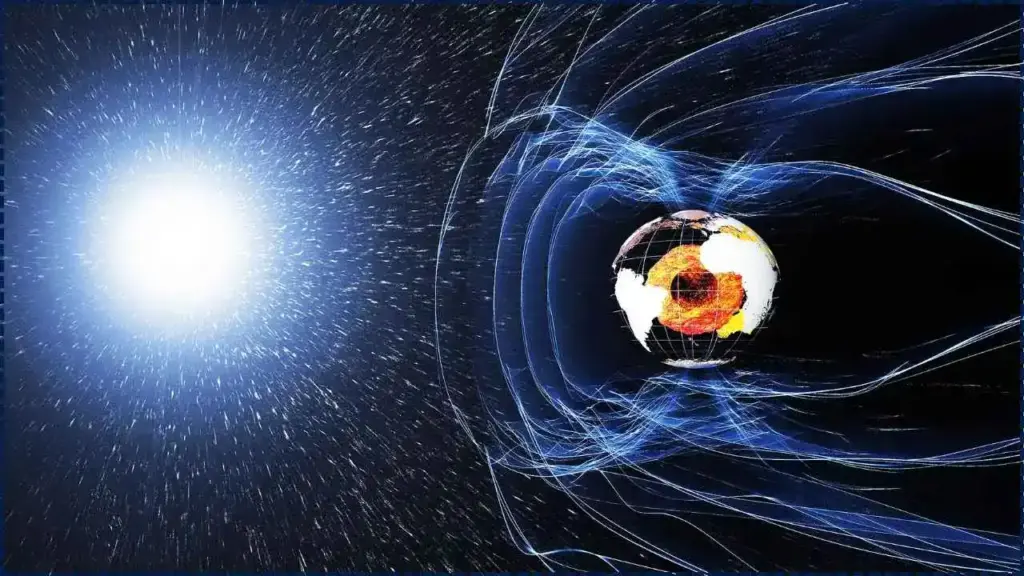
Earth’s Magnetic Field Almost Vanished
| Key Fact | Detail |
|---|---|
| Time of event | ~42,000–41,000 years ago |
| Field strength during event | Estimated at ~5–10 % of present dipole strength |
| Present daily significance | Technology and infrastructure rely on magnetic shield |
While the notion of a future magnetic field collapse draws dramatic headlines, scientists emphasise caution: the conditions that led to the Laschamps Excursion were complex and not immediately repeating. Studying the event empowers us to understand Earth’s geodynamo, evaluate technological vulnerabilities, and prepare wisely for low-probability but high-consequence scenarios.
What Exactly Happened During the Laschamps Excursion?
The Laschamps Excursion is a well-documented abrupt drop in Earth’s geomagnetic field that occurred between roughly 42,200 and 41,500 years ago. During that interval, the magnetic field’s dipole strength may have dropped to around 5 %–10 % of its current value.
Paleomagnetic records and cosmogenic isotope data (such as ^10Be and ^14C) show a surge in radiation-linked markers, suggesting that the magnetosphere weakened significantly. One recent study published in Science Advances detailed the wandering auroral oval around this time—a further indicator of major field disruption.
Why This Matters: Effects of a Weakened Field
The Earth’s magnetic field acts as a protective shield against solar and cosmic radiation. When it collapses or weakens, more high-energy particles and ultraviolet radiation can reach the atmosphere and surface.
Researchers modelling the Laschamps period suggest several possible effects:
- Ozone depletion and increased UV exposure.
- Expanded auroras toward lower latitudes and enhanced atmospheric ionisation.
- Potential disruption to climate systems, including shifts in wind belts and rainfall patterns.
Evidence of Impact on Life and Environment
Some scientists link the timing of the Laschamps event to changes in human behaviour, megafauna extinctions and environmental shifts. For example, a study found synchronised changes in ancient kauri tree-ring data with radiocarbon spikes and climate markers.
However, many experts caution against attributing major extinctions or climatic disasters directly to the magnetic event alone. “We simply do not have enough data to link the Laschamps Excursion to major extinctions or climate tipping points,” said Professor Alan Cooper of the University of New South Wales.
Could It Happen Again? What We Know Now
What Triggers These Events?
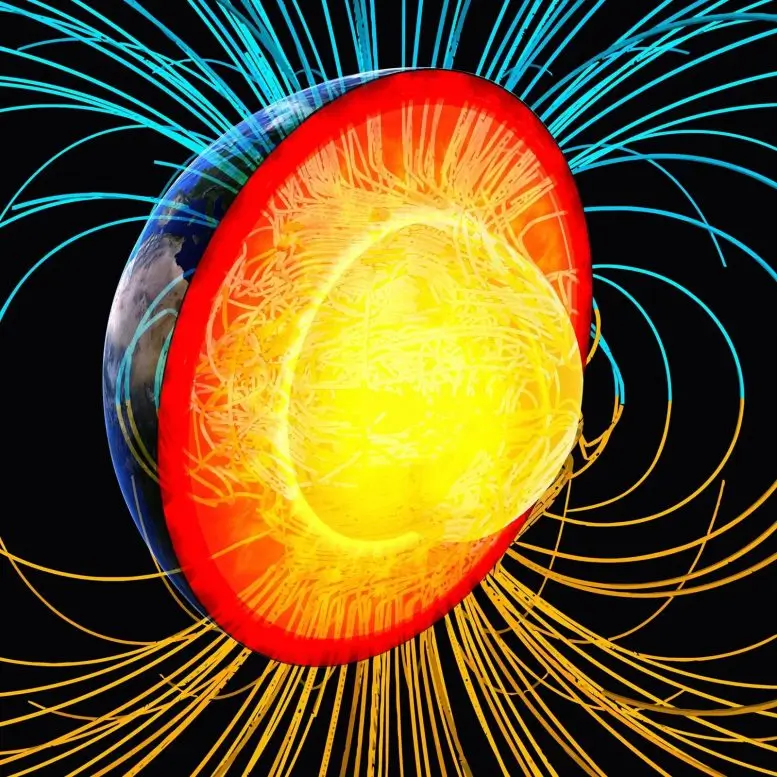
Earth’s magnetic field is generated by the motion of molten iron in the outer core (the geodynamo). Instabilities in this flow can lead to excursions (temporary weakings) or full reversals.
Scientists know such changes are irregular. The last full reversal occurred about 780,000 years ago (the Brunhes–Matuyama reversal). The Laschamps event is classified as an excursion, not a full reversal, meaning the field weakened dramatically but did not permanently flip.
Are We “Next”?
Current observations show the field’s dipole strength has decreased by roughly 10 %–15 % over the past 170 years. Some areas, such as the South Atlantic Anomaly, show locally weak field strength.
Nevertheless, geophysicists said there is no clear evidence that a field collapse or reversal is imminent. “While the event was dramatic, extensions of its effects into climate or biological crises remain uncertain,” Cooper said.
Implications for Modern Society
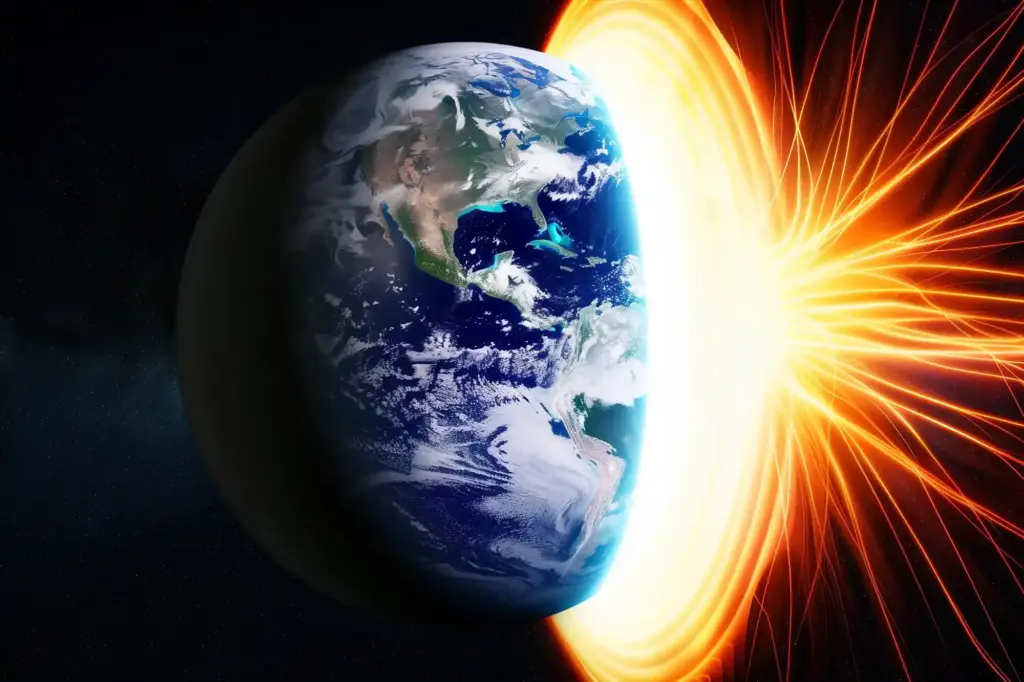
Even though a full collapse is not predicted, the Laschamps case offers lessons:
- Technology vulnerability: Modern infrastructure (satellites, power grids, communications) depends on the magnetic shield. A weakened field could increase risk of disruptions from solar storms.
- Radiation exposure: Higher radiation levels could affect aviation at polar latitudes and space missions.
- Preparedness importance: Understanding this event aids planning for rare but high-impact geophysical risks.
Related Links
How to Add $100s to Your Social Security Benefits Every Month – A Must-Know Tip
Limitations and Uncertainties
- Proxy records have resolution limits and often require interpretation through models.
- The exact duration, intensity and global uniformity of the Laschamps event remain debated.
- The effect on climate and life is plausible but not definitively proven—many variables intermixed.
FAQ About Shocking Discovery
Q1: What was the Laschamps Excursion?
A1: It was a geomagnetic event around ~41,000 years ago during which Earth’s magnetic field weakened dramatically to about 5–10 % of current levels.
Q2: Does this mean a magnetic reversal is imminent?
A2: No. Although the field is slowly weakening in parts, experts say there is no clear sign of an immediate collapse or reversal.
Q3: Would life on Earth end if the field collapsed?
A3: No. While increased radiation and technological disruption are potential concerns, life itself has persisted through past excursions.