The Supplemental Nutrition Assistance Program (SNAP) has recently been fully restored for millions of U.S. households following disruptions caused by the federal government shutdown. The program, a cornerstone of social safety nets for low‑income families, helps millions of Americans purchase food, supporting families, seniors, and individuals facing hardship.
With the restoration of benefits, many families can now breathe easier, knowing that they can buy the food they need to sustain themselves.
As you check your eligibility for SNAP, it’s also an opportune time to look into other support programs, such as Lifeline, which can help offset phone and internet costs. These combined benefits make a significant difference for families trying to stretch their budgets.
What is SNAP and Why Does It Matter?
SNAP is one of the largest federal programs helping those with low income purchase food. It provides critical support for millions of households, ensuring that nutritious food is accessible even for those with limited financial means.
Each month, eligible families receive benefits via an Electronic Benefit Transfer (EBT) card, which can be used at authorized grocery stores. Beyond food assistance, SNAP helps support local economies. It’s been shown that for every dollar spent on SNAP, about $1.50 in local economic activity is generated, benefiting not just recipients but the community at large.
In 2025, nearly 42 million Americans were dependent on SNAP to buy food. SNAP lifts people out of food insecurity, and studies show that it helps reduce poverty and improves health outcomes.
SNAP Resumption: Full Benefits Restored After Delays
After the federal government shutdown in 2025 caused disruptions in SNAP benefit payments, many households received partial benefits or saw delays in receiving their monthly food assistance. However, full SNAP benefits have now been restored in many states, offering relief to families who were struggling to make ends meet.
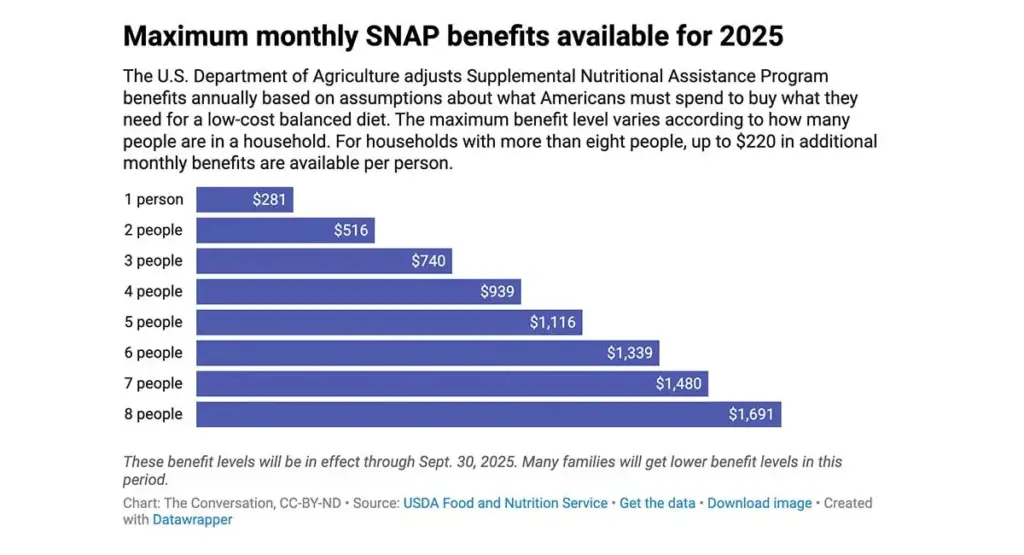
State governments have worked quickly to distribute the full benefit amounts, ensuring that eligible recipients are receiving the financial support they need. Many states, including California, Texas, and New York, have been able to distribute the full monthly benefits without further delays.
How SNAP Eligibility Works — Quick Check Could Help You Qualify
Eligibility for SNAP is based on several factors, including household income, size, and specific circumstances. Understanding these rules can help you quickly determine whether you qualify for assistance.
Income Guidelines
Most households need to meet both gross and net income limits to qualify. For example, a family of four typically must have a gross monthly income below $3,755 to qualify, though these limits vary depending on state guidelines and deductions.
Asset Limits
Certain assets are considered when determining eligibility. However, your primary home and some other assets do not count against your eligibility. Households with elderly members or those with disabilities often have higher asset limits.
Deductions and Special Circumstances
You may be eligible for larger benefits if you can deduct certain expenses, such as housing costs or medical expenses for elderly or disabled members of your household.
The Impact of SNAP on Long-Term Financial Stability
SNAP benefits don’t just provide immediate relief; they also help strengthen long-term financial stability. By ensuring that families don’t have to worry about food security, SNAP frees up limited income for other needs, such as paying rent, bills, and medical expenses.
Studies show that when families have access to regular SNAP benefits, they are more likely to save money, make long-term investments in their health, and provide better educational outcomes for their children.
Additional Resources for SNAP Recipients
Beyond SNAP, there are other community resources available to help households that are facing financial difficulties. Many food banks, community centers, and churches offer free groceries or meal programs to those in need.
Additionally, WIC (Women, Infants, and Children) is another program that provides food assistance for pregnant women, new mothers, and young children.
Food Banks and Community Support
Nonprofits such as Feeding America have partnerships with grocery stores and community programs to distribute surplus food. These food banks can be a great resource when SNAP benefits don’t fully cover a family’s needs.
What Happens If Your SNAP Application is Denied?
If your SNAP application is denied or if you’re found ineligible, you have the right to appeal the decision. The process for appealing varies by state, but typically, you can:
- Request a fair hearing where you can present your case to a judge or administrative officer.
- Provide additional documents or clarification on your income, assets, or other factors that may have affected your application.
The process is intended to ensure that eligible families receive the support they need.
State-Specific SNAP Benefits and Variations
While SNAP is a federal program, each state administers it differently. This means that eligibility requirements, benefit amounts, and application processes can vary. For example:
- California may offer higher benefits or additional programs that supplement SNAP.
- Alabama and Georgia may have faster processing times for applications or offer expedited benefits to certain households.
To check your state’s specific SNAP rules, visit your local SNAP office’s website or call for more details.
Future Changes to SNAP Benefits
While SNAP has provided vital support to millions of families, changes to the program may be on the horizon. Recent political debates have discussed the possibility of cutting benefits or tightening eligibility criteria, particularly in response to rising national debt and economic concerns.
However, many advocates argue that SNAP needs to be expanded to keep up with inflation and the increasing costs of food. Advocates for low-income families continue to push for increases in SNAP benefit amounts, especially as food costs outpace inflation.
Additionally, changes to the eligibility requirements could be introduced to reduce the burden on low-income families while keeping the program sustainable.
Related Links
January SSI Payment Comes Early in 2026: Why the Date Shifts and What Changes
December 24 Social Security Payments: Who Is Scheduled to Receive a Check
Taking Advantage of SNAP and Lifeline Benefits
The restoration of SNAP benefits is a critical relief for millions of families across the United States. These benefits not only provide essential nutrition but also help stabilize family budgets, allowing households to allocate their limited resources to other priorities like rent, utilities, and medical bills.
Furthermore, Lifeline benefits offer additional support for phone and internet services, helping families stay connected to work, education, and essential services. If you’re struggling financially or think you may qualify, now is the time to check your eligibility for SNAP and Lifeline.
A quick application could provide substantial financial relief and ensure that you have access to the support you need. For millions of families, SNAP and Lifeline represent a critical safety net — one that provides food security, financial stability, and opportunities for a better future.