The California Department of Motor Vehicles (DMV) has introduced updated procedures affecting drivers aged 70 and older, including in-person renewals, required vision screenings, and revised knowledge-test rules.

The changes, part of a statewide effort to improve road safety and reduce administrative burdens, shape how seniors renew their driver’s licenses. These new Affect Older California Drivers’ License Renewals requirements come as California’s population of older drivers continues to grow.
DMV Update
| Key Fact | Detail |
|---|---|
| In-person renewals required | Drivers 70+ must renew licenses in person every five years |
| Knowledge test waived for many | Written test no longer required for most seniors with clean records, effective Oct. 2024 |
| Vision screening mandatory | All seniors must pass an in-office vision test |
| Online initiation allowed | Renewal may begin online, but office visit required for completion |
Understanding the New Requirements for Older California Drivers
California’s revised renewal system for older drivers reflects demographic trends and public-safety concerns. With more Californians driving into their 70s, 80s, and 90s than at any time in state history, policymakers have sought a balance between safety and mobility.
According to U.S. Census data, California has more than 6 million residents age 65 or older, and that number is expected to keep rising through the next decade.
Traffic-safety studies from the Insurance Institute for Highway Safety (IIHS) and the National Highway Traffic Safety Administration (NHTSA) consistently show that older adults are more likely to experience severe injuries in crashes due to increased physical vulnerability.
At the same time, research also finds that most older drivers self-regulate their habits by avoiding nighttime, freeway, or high-traffic driving as they age. The DMV’s updated approach attempts to incorporate both sets of realities.
What Has Changed in DMV Update
In-Person Renewal Requirement Remains in Place
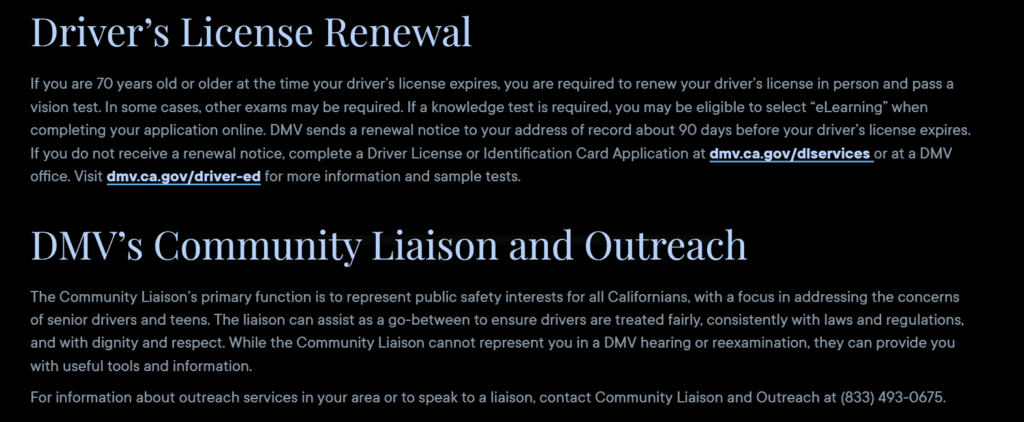
Under California law, all drivers must renew their license every five years. For individuals aged 70 and older, the renewal must be completed in person at a DMV field office. The DMV maintains that an in-person visit allows staff to conduct essential screenings — including vision tests and updated photographs — while also observing for potential signs of impairment.
Updated Knowledge Test Policy
Beginning October 1, 2024, the DMV announced the removal of the written knowledge-test requirement for most senior drivers whose licenses expire in 2024 or later. To qualify, an applicant must maintain a clean driving record, including no at-fault collisions, DUI suspensions, or point accumulations.
A DMV spokesperson said in an October 2024 statement: “By waiving the knowledge test for seniors with strong driving records, we can shorten wait times and allocate more resources to applicants who require in-depth evaluations.”
Drivers with traffic violations, medical conditions, or recent accidents will still be required to take a written test, participate in an eLearning module, or undergo further assessment.
Vision Screening Still Mandatory
All drivers aged 70+ must complete a vision exam during the renewal appointment. According to the DMV’s Senior Driver Handbook, vision impairment is one of the strongest predictors of diminished driving performance. Drivers who fail the vision screening may be referred to an eye-care professional or asked to complete additional assessments.
Beginning the Process Online
Drivers may start their renewal through the MyDMV portal, completing preliminary forms and paying fees in advance. However, the in-office visit remains mandatory for the final issuance of the license.
Health, Safety, and Special Reviews
Medical Reporting Requirements
California law requires physicians to report certain medical conditions — such as dementia, epilepsy, or disorders causing lapses in consciousness — that may impair driving. Reports may trigger a DMV re-examination, which can include a behind-the-wheel test, cognitive evaluation, or issuance of driving restrictions.
Dr. Michael Harriman, a geriatric medicine specialist at the University of California, Davis, explained:
“The majority of older adults can continue driving safely, but age-related changes in vision or cognition can emerge gradually. The DMV’s review system allows for careful, individualized assessments rather than broad age-based restrictions.”
Possible Restrictions Instead of Revocation
Instead of revoking a license outright, the DMV can apply targeted restrictions, including:
- No nighttime driving
- No freeway driving
- Use of corrective lenses
- Driving only within a certain radius
- Additional mirrors or adaptive equipment
This approach aims to preserve autonomy while safeguarding public roads.
Community Responses and Stakeholder Perspectives
Support From Senior-Advocacy Groups
Organizations representing older adults, including AARP California, have supported evidence-based renewals rather than universal testing.
AARP senior policy analyst Julia Stein commented in a recent interview: “We welcome policies that reflect ability rather than age. California’s revised system respects older adults’ independence while maintaining appropriate monitoring.”
Concerns From Road-Safety Advocates
Some safety organizations argue that removing the written test for many seniors may overlook gradual declines in cognitive ability. The California State Transportation Safety Board emphasized the need for continued monitoring, stating:
“Older drivers are not inherently unsafe, but they face unique risks. Any reduction in testing must be accompanied by strong mechanisms for identifying declining capability.”
Balancing Safety and Mobility
The debate highlights a broader challenge: maintaining public safety while ensuring older adults maintain access to essential transportation, especially in regions with limited transit options.
How California Compares to Other States
Across the United States, policies vary widely:
- Illinois requires road tests for drivers aged 79 and older.
- Texas mandates in-person renewals for those 79 and older but does not require knowledge tests for all.
- Florida eliminated mandatory vision tests for older drivers in 2011, citing insufficient evidence of effectiveness.
California’s model sits between these approaches, blending mandatory screenings with conditional testing.
What Older Drivers Should Do Now After DMV Update
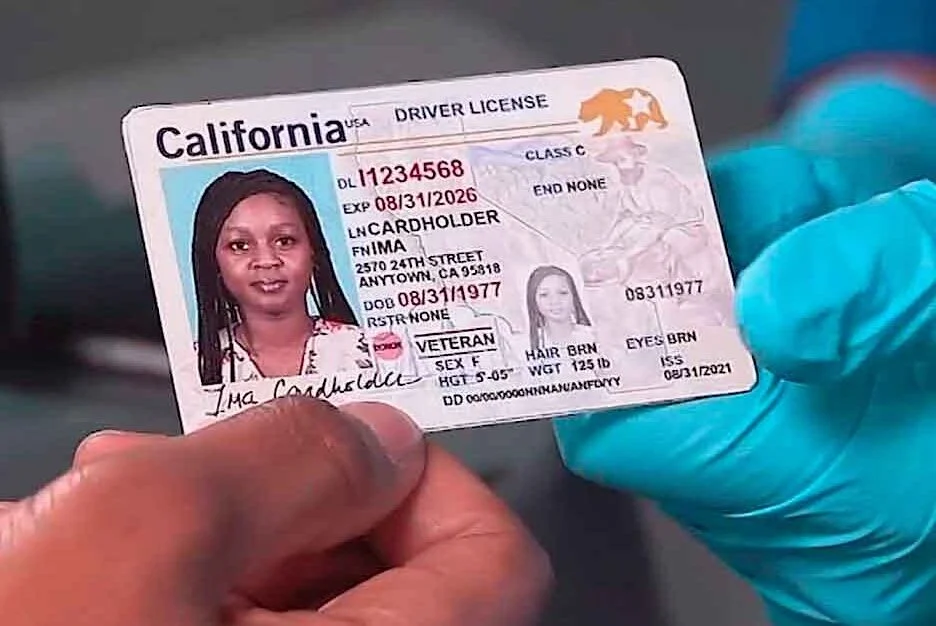
1. Review Your Renewal Notice Carefully
DMV notices specify whether the knowledge test is required. Drivers with clean records will likely see “test waived.”
2. Update Address and Contact Information
Renewal notices are sent 60–90 days before expiration. Outdated information may delay renewal.
3. Complete a Vision Exam Before Your Appointment
Eye-care professionals can confirm whether corrective lenses or updated prescriptions are needed.
4. Use the MyDMV Portal
Completing paperwork online reduces office-visit time.
5. Bring Required Documentation
This includes your current license, any medical documentation (if relevant), and corrective eyewear.
6. Consider Optional Mature-Driver Courses
California’s Mature Driver Improvement Program may improve driving skills and qualify participants for insurance discounts.
Related Links
SNAP Overhaul Announced — 42 Million Americans Required to Reapply Under New Rules
Retirees Welcome $56 COLA Boost — But One Expensive Misstep Could Erase the Gain
Expert Analysis: What the Changes Mean For the Future
Transportation-policy experts say California’s updated renewal system is likely to evolve as the state assesses its impact. With autonomous-vehicle development, enhanced driver-assistance technologies, and demographic shifts, the conversation about senior driving is expected to grow more complex.
Dr. Anita Sekhon, a transportation researcher at the University of Southern California, noted:
“The driving population is aging faster than the regulations governing it. California’s updates reflect an attempt to modernize, but continued data monitoring will determine whether the balance is effective.”
The DMV’s new renewal requirements mark a significant change in how the state evaluates older drivers, emphasizing both individualized assessment and streamlined service. Whether these policies improve safety and reduce administrative strain will become clearer over time.
For now, older Californians planning to renew their licenses should prepare for in-person visits, vision screenings, and — for some — updated testing procedures.