A prolonged federal government shutdown has created two distinct groups of Supplemental Nutrition Assistance Program (SNAP) recipients, as some states manage to distribute full monthly benefits while others issue delayed or partial payments.

The disruption, driven by stalled funding and conflicting federal guidance, affects millions of low-income households who rely on SNAP for basic nutrition. The divide highlights broader concerns about how vulnerable federal assistance programs respond during funding crises.
SNAP Update
| Key Fact | Detail |
|---|---|
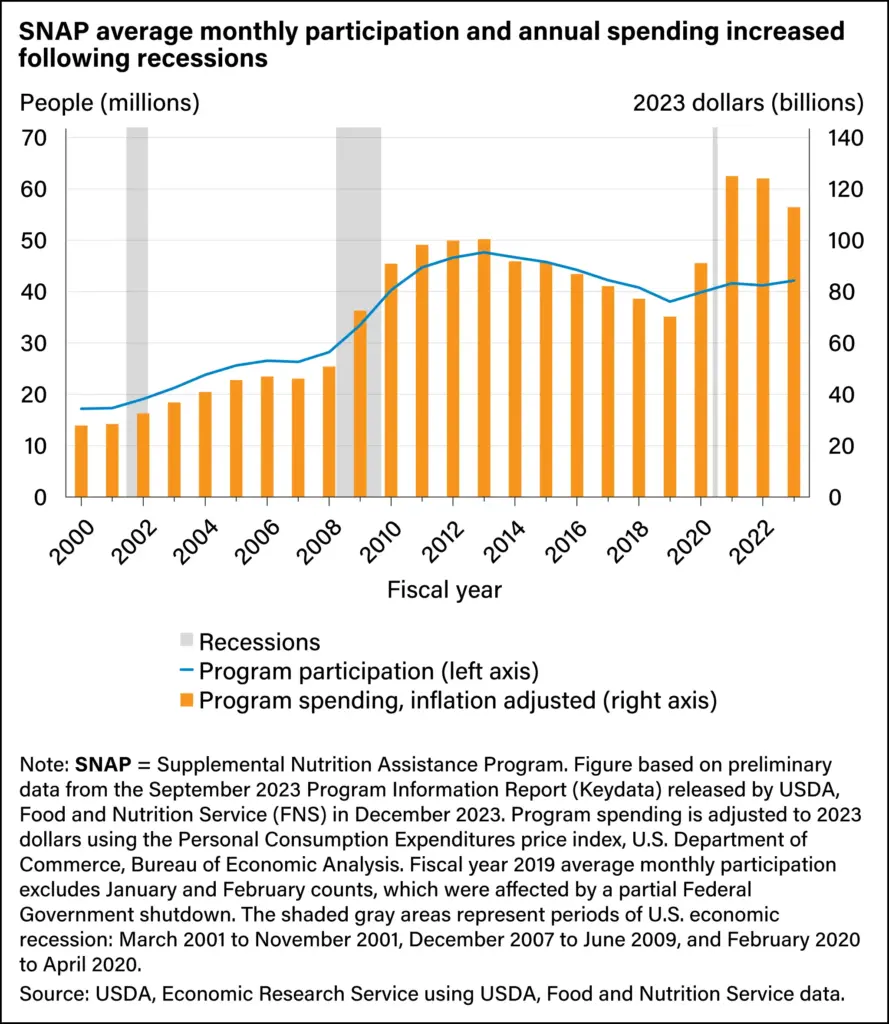
| Total Americans relying on SNAP | ~42 million people |
| USDA initial shutdown directive | States instructed to issue only partial November benefits |
| Federal court involvement | Judges in multiple states ordered full benefit disbursement |
| States advancing their own funds | At least five states fronted emergency dollars to issue full benefits |
Understanding the SNAP Update and the Shutdown’s Impact SNAP Update
A federal shutdown disrupts a wide range of government operations, but the SNAP update stands out because it affects vulnerable households’ access to food. While the program is mandatory spending, its monthly operations depend on administrative funding that must be renewed through congressional appropriations.
When that funding lapses, the U.S. Department of Agriculture (USDA)—which administers SNAP—must rely on limited contingency funds. As the shutdown entered its final week, the USDA announced it could no longer cover full November disbursements, prompting emergency directives to state agencies and creating two groups of recipients:
- Those receiving full, on-time benefits
- Those facing delays or partial payments
This division is unprecedented in its scale and effect.
How the Two Recipient Groups Formed
Group 1: States Able to Issue Full Benefits
Several states, including Pennsylvania, New Jersey, and Massachusetts, announced they would issue full November benefits despite the USDA’s early guidance. According to public statements, these states either:
- Used state emergency funds
- Relied on private food-aid partnerships
- Interpreted court rulings as authorization to proceed
- Determined that withholding benefits posed humanitarian risks
For example, Pennsylvania’s Department of Human Services said the state would “protect the nutritional needs” of residents by issuing full benefits while awaiting federal reimbursement.
Group 2: States Forced to Delay or Reduce Payments
Other states—particularly those with limited emergency budgets—adhered to the USDA’s directive to issue only partial benefits until federal appropriations resumed.
Many states reported:
- Benefits delayed by five to ten days
- Payments capped at 40% to 60% of typical allotments
- Confusion among recipients due to unclear federal instructions
- Increased call center volume, overwhelming state agencies
For families already budgeting down to the dollar, even short delays can threaten food stability.
Why the Federal Shutdown Hit SNAP So Hard
A Program Dependent on Monthly Funding Flows
SNAP is classified as mandatory spending, but its distribution system requires operational funding—money that finances electronic benefit transfers (EBT), state reimbursements, and administrative costs. During a shutdown:
- Beneficiary funds do not automatically stop
- But the machinery that delivers the benefits does
In its October memo, the USDA warned that contingency funds would run out quickly, estimating it could guarantee only 52% of November benefits.
Conflicting Directives Deepened the Divide
Initially, USDA authorized full payments. Days later, as reserve funds dwindled, it reversed course and ordered states to reduce benefits.
Reuters reported that USDA even instructed states to “undo” early efforts to issue full benefits after courts ordered full funding. This caused widespread administrative confusion and forced states to interpret conflicting legal and federal guidance.
Legal Challenges and Judicial Intervention
Court Orders Mandating Full Payments
Several states filed lawsuits arguing that the federal government was obligated to maintain full SNAP benefits during a shutdown.
Federal judges in at least two jurisdictions issued orders requiring USDA to:
- Release full benefits for November
- Refrain from penalizing states that paid early
- Provide clarity around the legal basis for limiting payments
The Department of Justice contested some of these rulings, arguing that the USDA could not legally disburse funds it did not have.
A Patchwork Response
Different judges issued different interpretations, adding yet another layer of inconsistency to state decision-making, and ultimately contributing to the emergence of two recipient groups.
Effects on Households and Food Security
Immediate Impacts
For millions of low-income households:
- SNAP provides more than 70% of monthly food spending
- Most benefits run out in two to three weeks
- Families rely on predictable payment dates to avoid food shortages
Delays or reductions resulted in:
- Increased reliance on food banks
- Rising grocery debt as households purchased food on credit
- Higher use of school meal programs
- Increased child hunger risk, according to food-security researchers
Expert Perspectives
Food policy experts warn that even a short interruption can have outsized effects.
“SNAP is designed for consistent monthly support. Delays don’t just shift the timeline—they reduce real food access,”
said Dr. Melissa Laird, a senior nutrition researcher at the University of Michigan.
Advocacy organizations also point out that SNAP recipients often have few financial buffers, making them more sensitive to disruptions than most American households.
Historical Context: How This Compares to Prior Shutdowns
The United States has experienced previous shutdowns, but the current SNAP divide is more severe due to:
- Higher food inflation
- Increased SNAP caseloads after the pandemic
- Smaller federal emergency reserves
- A later-in-the-year shutdown when reserves were already reduced
During the 2018–2019 shutdown, USDA found money to cover February benefits. In 2025, heightened political gridlock and depleted reserve funds reduced the government’s flexibility.
Administrative Challenges at the State Level
Staffing shortages intensified disruptions
Many state SNAP offices already face:
- Worker shortages
- High turnover
- Increased application volume
The shutdown accelerated administrative burdens, forcing states to modify EBT schedules, respond to surging public inquiries, and revise distribution timelines multiple times in a matter of days.
Technological strains
EBT systems rely on:
- Federal transaction approvals
- State system updates
- Daily batch processing
Fluctuating federal directives required repeated system recalibrations, leading to outages and erroneous payment postings in some states.
What Recipients Should Do Now
State officials advise SNAP recipients to:
- Check EBT balance daily
- Monitor their state’s SNAP webpage for updated schedules
- Contact local food banks if benefits are delayed
- Keep documentation of any missed or partial payments
- Be cautious of scams targeting SNAP users during crises
Related Links
New York Residents May Receive $400 Payments — Full Eligibility Details Inside
Deadline Today — Octapharma Data Breach Claims Worth Up to $5,000 Close Shortly
The Broader Policy Implication: A Vulnerable Food Safety Net
The emergence of two SNAP groups has sparked a deeper conversation in Washington:
- Should SNAP have permanent emergency funding?
- Should states be allowed to front costs without risk of federal penalties?
- Should Congress treat SNAP more like Social Security, with protection from shutdowns?
Lawmakers from both parties have signaled interest in reforms, though solutions remain uncertain amid ongoing political divisions.
Least Critical Information
As federal funding is restored and states work to normalize SNAP payments, many recipients hope the system will return to routine. Advocates say the shutdown exposed vulnerabilities that must be addressed to ensure consistent food support during political stalemates.